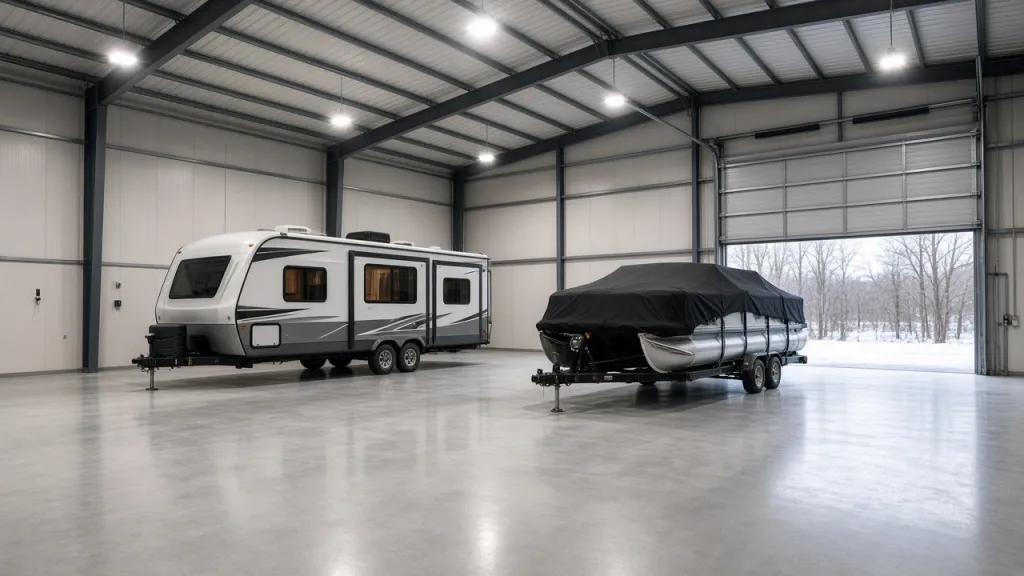
RV & camper storage
RV storage gives motorhomes, travel trailers, fifth-wheels and pop-up campers a secure space between trips or over the winter. Many neighborhoods and HOAs don't allow RVs in the driveway, and a dedicated space protects your rig and your relationship with the neighbors.
When a RV storage space makes sense
Spaces are measured by length, often 30 to 45 feet or more. You can choose outdoor parking, covered canopies, or fully enclosed and sometimes heated indoor storage. Look for wide drive aisles and pull-through spaces if backing a long rig isn't your favorite part of camping.
Best for
- Class A, B and C motorhomes
- Travel trailers and fifth-wheels
- Pop-up campers and toy haulers
- Winter storage in cold climates
- Owners whose HOA bans RV parking
What to look for
Questions worth asking before you choose a RV storage space.
Length and height
Measure your rig's full length, including the hitch and ladder, and its height for covered or indoor spaces.
Pull-through spaces
Pull-through spaces and wide aisles make arriving and leaving much easier with a long rig.
Hookups and dump station
Some facilities offer electric hookups for battery charging, a dump station, a wash bay or air for tires.
Covered or indoor
Covered or indoor storage protects roofs, seals and paint from UV, hail and snow loads.
Common sizes
Find RV storage spaces near you
Search by city or ZIP above, or start from a state below. Unclaimed listings don't list their features yet, so ask in your free request whether they offer what you need.
Tips from the pros
- Winterize the plumbing before cold weather: drain the tanks and lines and add RV antifreeze.
- Remove food and open the fridge, and use moisture absorbers and rodent deterrents.
- Cover the tires against UV, and level and chock the rig.
- Check the roof seals before you store it. Small leaks get worse over a season.
RV & camper storage: common questions
How long are RV storage spaces?
Is covered RV storage worth it?
Can I work on my RV or stay in it at the facility?
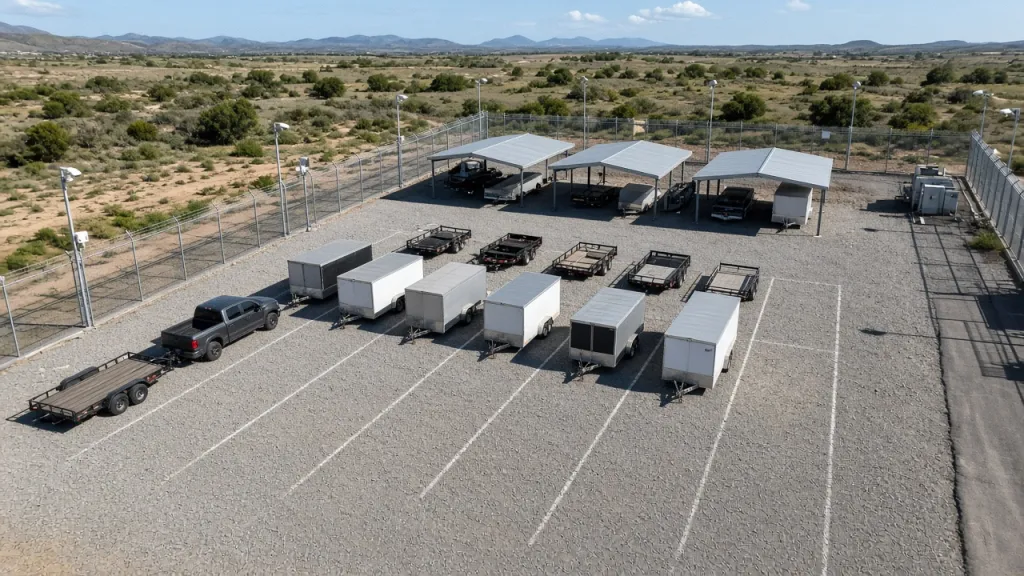
Do you offer RV storage spaces?
List your facility free and reach renters searching for exactly what you offer. Upgrade any time for online reservations and a full website.