
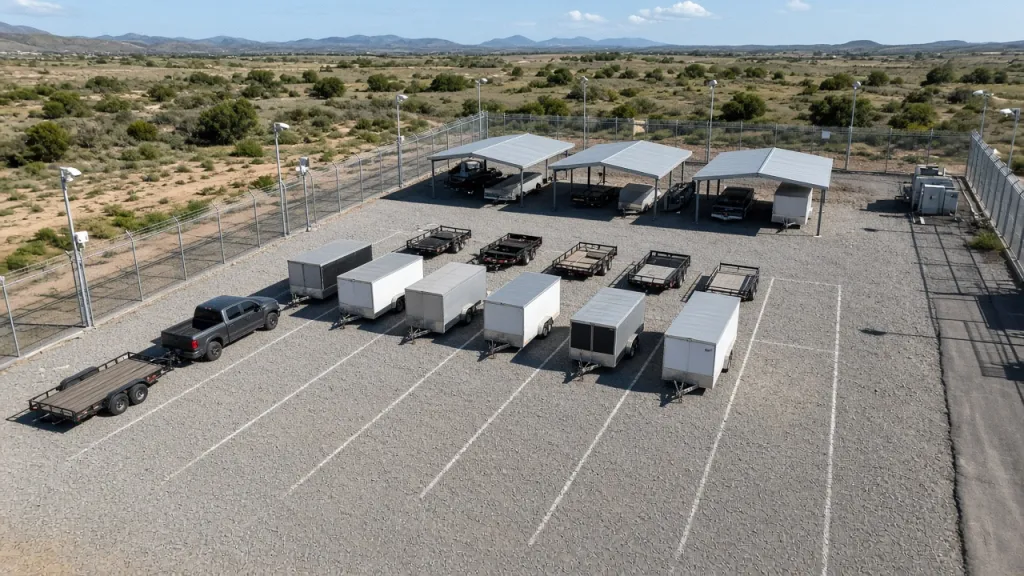
Airplane hangar storage
Hangar storage keeps an aircraft out of hail, sun, snow and wind, and it cuts down on corrosion, avionics heat damage and preflight time. Most hangar space is at or next to an airport, rented by the month or year.
When an aircraft hangar makes sense
The two common kinds are T-hangars, nested units shaped to fit a single engine or light twin, and box (rectangular) hangars, which have a full width door and room for larger aircraft, a workbench or two planes. Shared or community hangars are the budget option.
Best for
- Single engine pistons such as a Cessna 172 or Piper Cherokee
- High wing and low wing light twins
- Experimental and homebuilt aircraft
- Owners on a T-hangar waitlist who need a box hangar now
- Flight schools and clubs with several aircraft
What to look for
Questions worth asking before you choose an aircraft hangar.
Door width and height
Check the door opening against your wingspan and tail height with some margin. Door width is the real limit, not the floor area.
T-hangar or box hangar
T-hangars are cheaper and fit one plane. Box hangars have a full width door, more room and often power and a bench.
Airport access and security
Ask about gate access, after hours entry, cameras and whether the airport is towered or uncontrolled.
Power, lighting and floor
Power lets you run a battery tender, engine heater or tools. A sealed, level floor makes towing easier.
Common sizes
Airplane hangar storage rate guide
Typical monthly ranges seen across the US. These are estimates, not quotes: prices depend on the city, the facility and the season.
| Size or option | Typical range | Notes |
|---|---|---|
| Tie-down (outdoor, for comparison) | $50 to $150/mo | |
| Shared / community hangar | $150 to $400/mo | |
| T-hangar, single engine | $250 to $700/mo | |
| Box hangar, 50 x 50 ft | $700 to $1,800/mo | |
| Box hangar, 60 x 60 ft and up | $1,500 to $4,000+/mo | Depends heavily on the airport and region |
For real prices, request free quotes or search below and compare facilities near you.
Before you store: checklist
- Measure wingspan, length and tail height, then compare with the door opening
- Confirm the airport and hangar allow your aircraft type
- Send proof of aircraft liability insurance and registration
- Ask if fuel, oil and maintenance work are allowed inside
- Install a battery tender only where power is approved
- Fit pitot covers, control locks and wheel chocks
- Check the waitlist rules and how long a lease you need
Find aircraft hangars near you
Popular cities
Top states
All 51 states
What an aircraft hangar costs
Prices are set by each facility. These are the things that move the price most.
- Outdoor, covered and enclosed spaces are priced very differently (enclosed is highest)
- Space length: longer spaces cost more
- Power hookups, wash bays and 24-hour access add to the rate
- Location and season (winter storage is busiest in northern states)
Get free quotes from facilities near you to compare real prices.
Tips from the pros
- Get on T-hangar waitlists early. Many airports have waits of months or years, so a box hangar or shared hangar can bridge the gap.
- Ask whether the hangar is on airport property. Airport owned hangars often have rules on what can be stored besides the aircraft.
- Use a tug and mark the floor so the plane goes in the same way each time.
Airplane hangar storage: common questions
What is the difference between a T-hangar and a box hangar?
How much does hangar storage cost?
What size hangar do I need?
Do I need insurance to rent a hangar?
Do you offer aircraft hangars?
List your facility free and reach renters searching for exactly what you offer. Upgrade any time for online reservations and a full website.